In shortYes for most travellers, with conditions. The village sits at 508 m on a lake up to 125 m deep, inside a landscape UNESCO inscribed in 1997, and salt has come out of the Salzberg above it for roughly 7,000 years. The arguments against: 2h16 by train from Salzburg, 3h33 from Vienna, no car access to the centre, and about 1.2 million visitors a year sharing it with 741 residents.
741people living in the village
1.2 millionvisitors in 2025
54coaches let in per day
1997year of UNESCO inscription
Is Hallstatt worth visiting: what you get for the trip
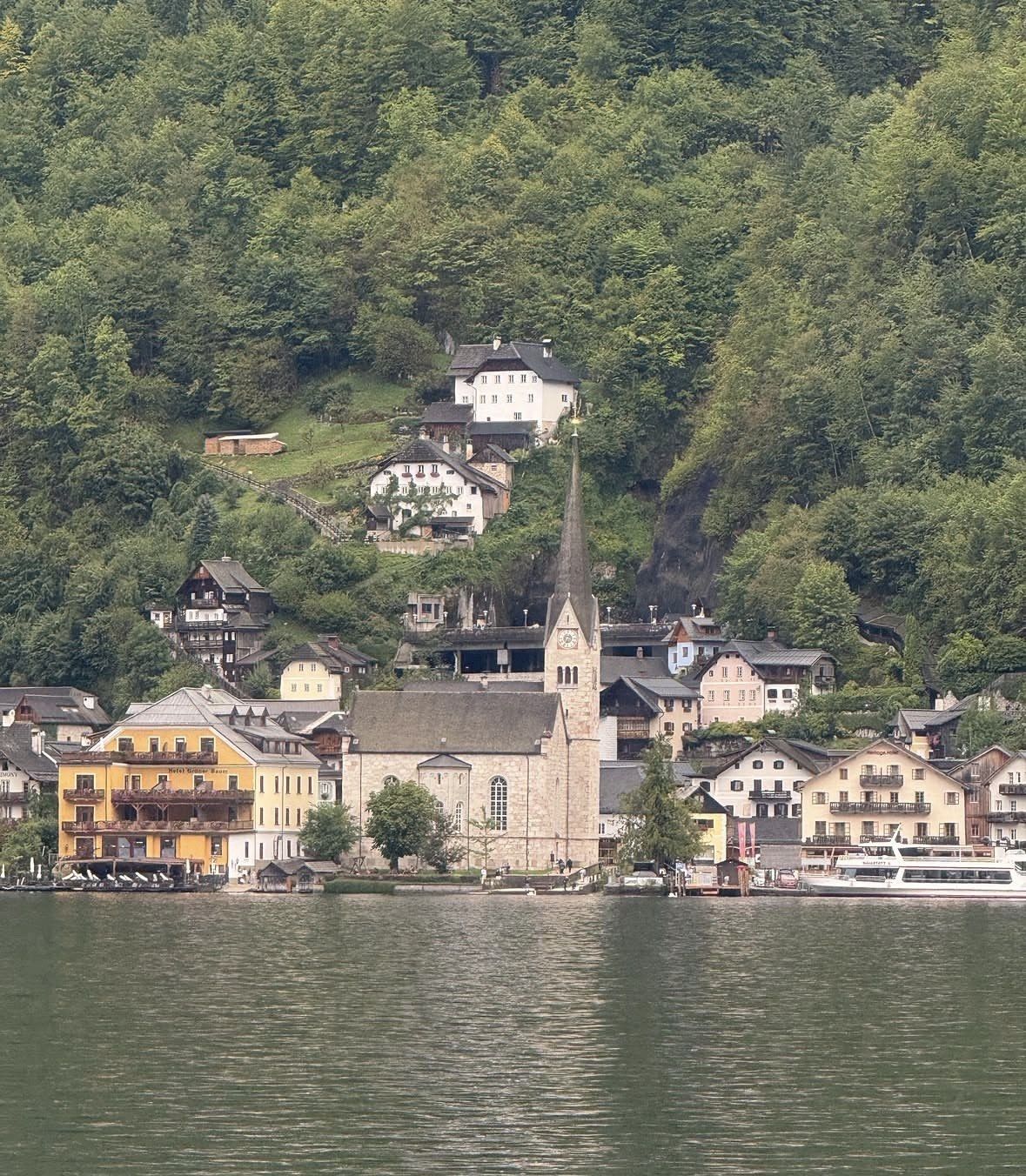
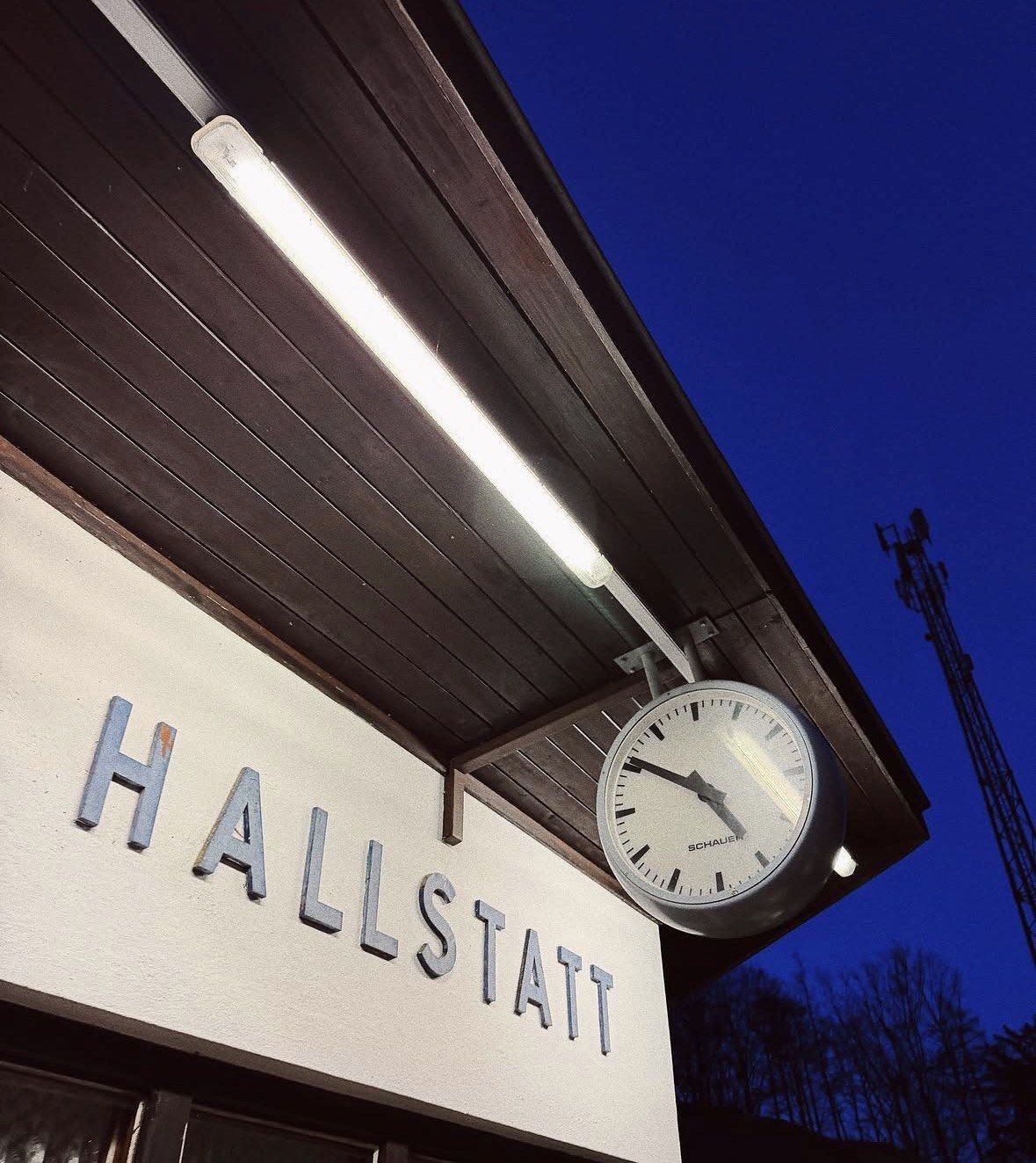
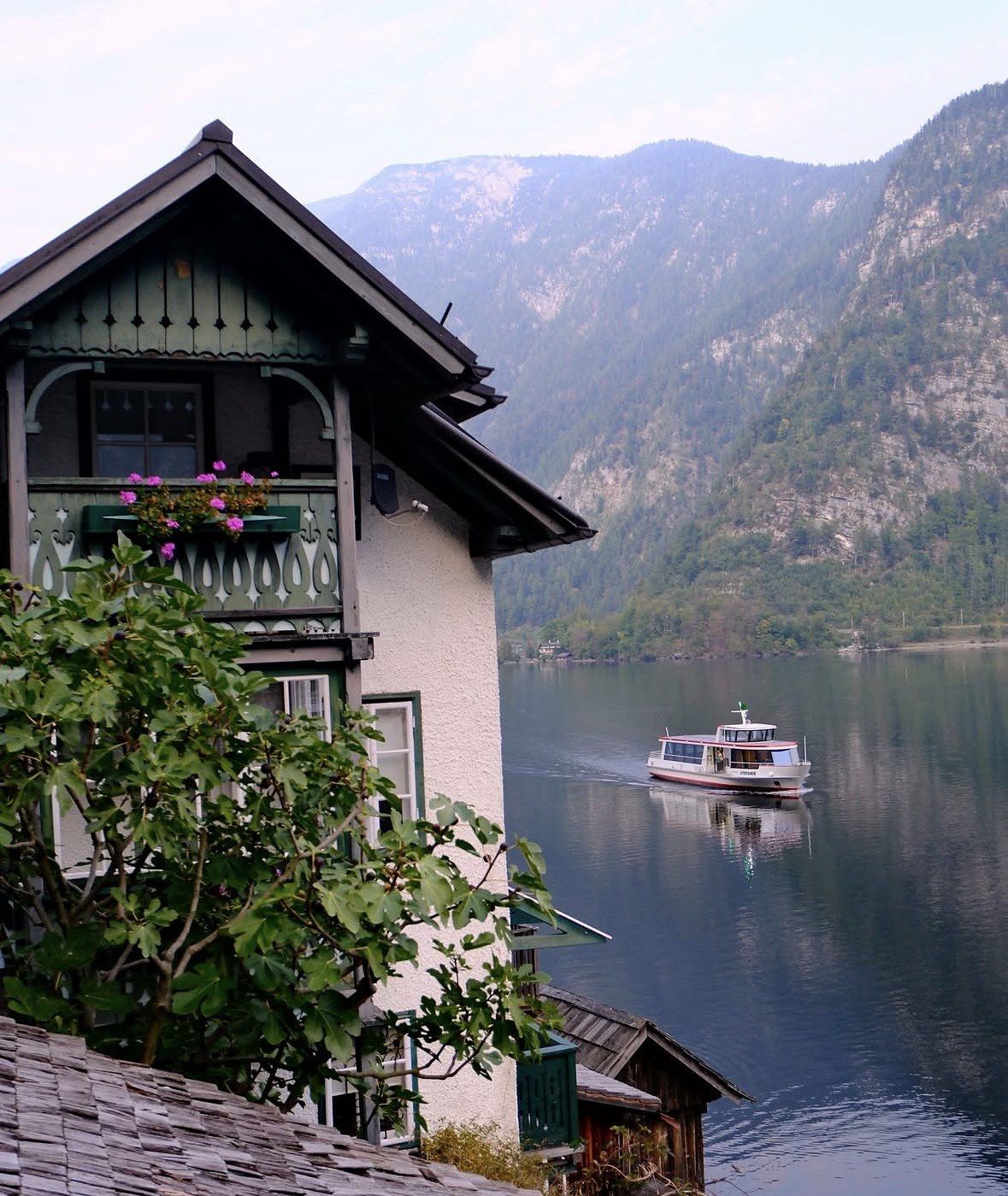
The setting does most of the work, and you see the best of it before you land. Part of what you get for the trip is a quirk of geography: the platforms at Hallstatt railway station are on the east shore of the Hallstättersee, the lake below the village, which is the wrong side for walking in, so the last stage is by water. Two minutes downhill from the train brings you to the pier, and MS Stefanie, operated by Hallstättersee Schifffahrt Hemetsberger, takes about 15 minutes to put you on the other side. The water you cross covers 8.55 km², measures 5.9 km by 2.3 km, drops to 125 m and lies at 508 m. You step off at the market square with the houses stacked above you, which is the view people came for.
Behind the postcard sits an unusual piece of archaeology. UNESCO's 21st session put the Hallstatt–Dachstein/Salzkammergut Cultural Landscape on the World Heritage list in 1997, and archaeologists had already borrowed the village's name for a whole European period, the Hallstatt culture of roughly 800 to 450 BC, because of what was dug out of the ground above the roofs. Salzwelten puts about 7,000 years of salt extraction behind the high valley you look up at.
The mine is the part of the day you cannot get anywhere else. You spend about 90 minutes below ground at a steady 8 °C, ride a 64-metre miners' slide and sit in the Bronze Age Cinema roughly 400 metres inside the Salzberg, where the almost 3,400-year-old wooden staircase found in 2002 is the exhibit. The rebuilt Salzbergbahn funicular has been running again since 29 August 2026, covering 593 metres and a 325-metre height difference in just over two and a half minutes, in two barrier-free cabins that carry 60 people each.
The Skywalk comes with the mine ticket rather than as a separate attraction. Below the Rudolfsturm, at 855 m above sea level and 360 metres over the village roofs, steel cantilevers out roughly 12 metres to form the 'World Heritage View' platform, and the same ticket opens the panorama lift, the scenic bridge, the Rudolf's Tower exhibitions and the 'Pathway through Time', which has an audio-guide app.
- The last 15 minutes of the trip done by boat, from the station pier to the market square, on every date in the calendar
- Ninety minutes underground at 8 °C, with the miners' slide and the Bronze Age Cinema about 400 metres in
- The Skywalk platform at 855 m, covered by the mine ticket
- A UNESCO cultural landscape inscribed in 1997, above the burial ground that named a European Iron Age period
- 125 m of water depth and 5.9 km of length to look along, plus hire boats from April to mid-October when the weather holds
What works against a visit
Distance is the first problem and it is not small. Trains from Salzburg Hbf run at least hourly and take 2h16 or 2h41 with a 2-3 minute change at Attnang-Puchheim; from Wien Hauptbahnhof it is 3h33 to 3h58 on the same change, then the walk down to the pier and the crossing. Driving is not much better: roughly 1 hour 1 minute over about 75 km from Salzburg, about 3 hours 8 minutes over 280.2 km from Vienna, and roughly 2 hours 8 minutes over about 206 km from Munich, whose public-transport alternative costs two changes plus the ferry and lands at around 5h39.
Inside the village the numbers are the issue. In 2025 roughly 1.2 million visitors passed through while overnight stays came to just over 130,000, which means nearly everyone you share a lane with has a departure time that same afternoon. Beds are genuinely limited: the tourist board's own directory lists four hotels and guesthouses, seven pensions and thirteen holiday apartments. The municipality admits a maximum of 54 tour coaches a day, each holding a booked slot and required to stay at least 2 hours 20 minutes, so the load arrives in one block across the middle of the day. For 2026 the deputy mayor put day visitors down by about 10%, an effect attributed partly to the year the funicular spent out of service.
You also walk more than you expect. Nobody drives into the historic centre, which two barrier systems close off, and a booking at a hotel or apartment inside it does not change that. No day-visitor space can be reserved ahead, and from the lots it is a 5 to 20 minute walk to the main sights. Salzwelten keeps no parking for visitors at all, asks guests to budget an hour for finding a space and recommends public transport instead. Reaching the Salzberg terrace from the centre under your own power means 2.4 km and 483 metres of climb, an hour's work, and the serpentine footpath into the high valley has been shut since 3 December 2024 in any case.
Two timetable facts catch people out. Evenings have no bus at all in this direction, and 18:16 is when the last one leaves Bad Ischl station for Hallstatt, Obertraun and Gosau. Work on Seestraße, the street along the water, runs from 12 October 2026 to an estimated 25 June 2027 on the stretch between Polreich and the war memorial, with traffic signals controlling the flow and a pause from 21 December 2026 to 11 January 2027.
Is Hallstatt expensive, and what you pay for
Spending is concentrated in a handful of ticketed places, so you can decide in advance which of them you want. The mountain is the big item: the salt mine with the Salzbergbahn funicular is the main paid attraction of the day, and the small-group tour from Salzburg on this site lists it as a not-included extra at €43 for adults and €21 for children aged 4 to 15, paid in cash to the guide. Time is part of the price too: the region's advice is a minimum of three hours for the Salzberg with the funicular counted in, around 90 minutes of it below ground. Three conditions come attached. The minimum age is 4, registration is required, and the mine stays inaccessible to wheelchairs even though the valley station, the funicular and the mountain station are barrier-free.
Down in the village, the World Heritage Museum at Seestraße 56 charges its own admission on its own seasonal hours, with last entry 60 minutes before closing. The Bone House in St Michael's Chapel at Kirchenweg 40 is run by the Catholic parish, takes cash and takes about ten minutes. The boats are a third operator again, Hemetsberger, and the scheduled station ferry is the one that counts as transport. Krippenstein and the Dachstein caves over in Obertraun belong to Dachstein Tourismus AG, a separate company with its own calendar and its own tariffs.
The parts people photograph most often carry no ticket. On the tourist board's listing the official Fotopoint has an address, Gosaumühlstraße in the centre, and little else: no queue system, not even a measured walking time from the market square, which it calls a short walk away, and it is open to anyone passing. The square, the church terrace, the shoreline and the lane network need no ticket either, and the single-day Christmas market on Tuesday 8 December 2026, 10:00 to 18:30 on Marktplatz, needs no entrance ticket.
The complaint that Hallstatt is overrated usually comes out of one kind of visit: arriving at 12:30, standing on Seestraße with 54 coaches' worth of company, leaving at 15:00. Before 10:00 and after 17:00 the square is a different place. If your schedule can only deliver you into the middle of the day, spend those hours underground or in the museum and keep the lakeside path for the edges of the day.
The mine without the logistics
A small group, 8 hours out of Salzburg, from €149, rated 4.6 ★ (289 reviews). Pick-up is in the city or at your hotel, and the mine including the funicular is listed separately at €43 for adults and €21 for children aged 4 to 15, cash to the guide.
★ 4.6/5 · 289 reviews
Where Obertraun, Gosau and Bad Ischl come in
Obertraun and Gosau are worth adding for what Hallstatt itself does not have. The cable car up the Dachstein Krippenstein in Obertraun works to its own calendar: daily from 1 May to 1 November 2026, first ascent at 08:40, a cabin every 15 minutes, then nothing until the winter run from 19 December 2026 to 29 March 2027. An easy 20 to 30 minute walk from the mountain station brings you to the 5fingers, five platforms of about 4 x 1 m hanging over roughly 400 m of air, one of them fitted with a large Baroque picture frame pointed down at Hallstatt. Fifteen minutes or so from the top station, at 2,100 m, is the World Heritage spiral. The caves work on guided tours only, and you register in person at the cave ticket office at the Schönbergalm mid-station.
Gosau gives you the flat walk Hallstatt cannot. Gasthof Gosausee is the start and finish of a 4.2 km loop around the Vorderer Gosausee that stays level at roughly 940 m, is graded very easy and takes about an hour. Its walking season runs May to October, and the shore path is not cleared or secured in winter because of avalanche and rockfall risk. Getting there without a change means starting in Bad Ischl, where line 541 runs via Bad Goisern to Gosau and the Gosausee; out of Hallstatt you ride line 544 or 543 as far as Gosaumühle and change.
Bad Ischl is the transport hub rather than the scenery, about 20 km north of Hallstatt, with the ride on to Hallstatt, Obertraun or Gosau taking about 40 to 50 minutes. The Kaiservilla there admits visitors on guided tours of about 45 minutes and no other way. With one day in the region, spend it in Hallstatt, where the mine, the museum and the inscription-naming archaeology all sit in one place. Keep Obertraun and Gosau for a second day, on the clearer of your mornings, since the 5fingers gives you nothing in cloud while the caves and the mine are weather-proof.
The verdict by traveller type
Four hours in the village is the honest unit of measurement for a day-trip visitor. That covers the market square, the shoreline, the parish ossuary at Kirchenweg 40 and the World Heritage Museum at Seestraße 56. The Salzberg will not fit into those four hours. Count the funicular and the region's floor is three hours, and the clock runs against you: the final guided tour begins at 16:30 until 1 November 2026 and at 15:00 from then until 6 January 2027. As of late October 2026 the operator had posted nothing for dates after 6 January 2027, so confirm the hours with Salzwelten before you commit to a day.
For photographers the hour of the day decides more than the lens, and the rules in the village are explicit. Conduct boards stand in Hallstatt in German, English, Korean and Chinese, and they ask for four things: no drones, no walking onto private property, litter and cigarette ends disposed of properly, and quiet times observed. Photographs of worshippers and of mourners are the reason the doors of both churches are now locked ahead of services, or watched by someone posted at the entrance; at funerals the staff ask visitors to keep away from the mourners and to put the camera down. A metre of ground is often all there is between the footpath and somebody's garden or balcony.
| Traveller | Verdict | What decides it |
|---|
| Short-stay city visitor, one day from Salzburg or Vienna | Worth it, but choose either the village or the mountain | Trains run 2h16-2h41 from Salzburg and 3h33-3h58 from Vienna, then two minutes to the pier and a 15-minute crossing; four hours in the village covers the square, the shore, the ossuary and the museum, while the Salzberg wants three hours of its own |
|---|
| Photographer | Worth it, and worth a night | The quiet hours are before 10:00 and after 17:00, which no rail day trip delivers; the Fotopoint on Gosaumühlstraße is open to anyone passing, the ferry crossing gives the far-shore view every day of the year, and the Baroque frame on the 5fingers gives the distant one from 1 May to 1 November |
|---|
| Family with young children | Worth it if the children are at least 4 | The mine takes children only from the age of 4 and registration is required; it holds a constant 8 °C, so pack a warm layer, and it is not wheelchair accessible although the new funicular cabins are; boat hire on the lake runs April to mid-October, daily 10:00 to 17:00, in good weather only |
|---|
| Hiker | Worth two days, based in the valley | The east-shore Ostuferwanderweg is 9.7 km, easy, about 2h36 and walkable April to November; the Echerntal circuit to the Waldbachstrub waterfall is 5.7 km with 558 m of ascent, about 2h30, medium with a black final section; the serpentine path to the high valley is shut and the Soleweg to Steeg is closed indefinitely for rockfall |
|---|
Deciding how you get there
Travelling independently, the train plus the ferry is the arrival that works. Services from Salzburg and Vienna run at least hourly with a 2-3 minute change at Attnang-Puchheim, the pier is two minutes below the platforms, and the boat is timed to train arrivals, so you land in front of the village instead of in a barrier-controlled car park 5 to 20 minutes away. Driving makes sense only for an overnight stay, since guests in the centre use a hotel ticket at P1 and a shuttle to their accommodation every half hour from 09:00 to 19:00.
A guided day trip takes the connections off your plate. Out of Salzburg the shortest option is the Hallstatt Half-Day Tour from Salzburg, 5.5 hours, from €85, rated 4.4 ★ (1182 reviews), a guided coach with a professional guide that sets off from the bus terminal at Mirabellplatz, corner Hubert Sattler Gasse 1, in front of St Andrew church. Nothing in Hallstatt is prepaid on it: entrances stay optional and are sorted out on the spot with off-season hours taken into account, and the Skywalk visit is counted at 1 hour.
From Vienna the choice is simpler than the distance suggests. On the Hallstatt Guided Day Trip from Vienna With Skywalk Option you are out for 13 hours, from €71, rated 4.6 ★ (1482 reviews). A live guide works the whole trip, the old town is covered on foot, there are photo breaks on the way including the wedding bridge at Ort castle, and the Skywalk entrance is in the price except during the winter break from 07.01.2027 to 29.01.2027. At booking you pick either collection from a centrally located Vienna hotel in postcodes 1010 to 1090 or the meeting point at Tourist Info, Albertinaplatz, by the Karlsplatz underground station.
When the mine is the whole reason for the trip, the small-group run from Salzburg is the one to compare: 8 hours, from €149, rated 4.6 ★ (289 reviews), with pick-up in the city or at your hotel and an air-conditioned vehicle. The mine including the funicular appears as a not-included extra, €43 for adults and €21 for children aged 4 to 15, paid to the guide in cash. That settles the one piece of Hallstatt logistics that regularly goes wrong, since the footpath up to the high valley is still closed and the mountain works to fixed last-tour times.
Questions people ask
Is one day in Hallstatt enough?
For the village itself, yes. The square, the shoreline, the parish ossuary and the World Heritage Museum fit into about four hours without rushing. Add the Salzberg and the day runs past six, because the region advises at least three hours for the mine including the funicular. A night in the village buys you the hours before 10:00 and after 17:00, and it also gets you round the 18:16 last bus from Bad Ischl.
Is Hallstatt worth visiting in winter?
It works if you plan for short hours. Between 2 November 2026 and 6 January 2027 the latest start for a guided tour in the salt mine is 15:00, the funicular's final descent is 16:30, and 24 and 31 December are closed days. The Bone House runs 11:30 to 14:30 in November with no December-to-April hours published, while the museum keeps 11:00 to 16:00 and is one of the few indoor sights open in January and February. The station ferry sails every day of the year, and Krippenstein does not restart until 19 December 2026.
Can I drive into Hallstatt?
No. In the parking operator's own words, reaching the historic centre by car is not possible; two barrier systems close it off, and that applies to hotels and holiday apartments inside it as well. Day-visitor spaces cannot be reserved and every lot is barrier-controlled, leaving a 5 to 20 minute walk to the main sights. Salzwelten runs no visitor parking itself and warns guests to set aside an hour for the search.
What are the rules about drones and photographing people?
Information boards from the municipality, in German, English, Korean and Chinese, ask you not to fly drones, not to step onto private property, to put litter and cigarette ends where they belong and to keep to quiet times. Both churches responded to tourists photographing worshippers and mourners by locking the doors before services or keeping someone on the entrance. During funerals, staff ask visitors to keep their distance and not to take pictures.
Do I need to register for the salt mine?
Registration is required for the underground tour, and children are admitted only from the age of 4. Expect about 90 minutes at a steady 8 °C, which is why a warm layer belongs in a July daypack. Barrier-free access covers the valley station, the funicular and the mountain station; the mine underground does not offer wheelchair access. Walking up instead is not an option at the moment: the serpentine footpath into the high valley has been closed since 3 December 2024, though the Salzbergweg to the funicular's valley station stays open.
Read also