In shortHallstatt lies about 75 km from Salzburg, roughly 1 hour 1 minute by road. Trains run at least hourly in 2h16 or 2h41 with a 2 to 3 minute change at Attnang-Puchheim, then a crossing of about 15 minutes brings you from the station pier to the village. The bus version of the same trip means three lines: 150 as far as Bad Ischl, then 541, then 543 after changing at the Gosaumühle stop.
75 kmBy road from Salzburg
2h16Fastest train one way
18:16Last bus from Bad Ischl
5.5 hoursGuided half-day trip
How to get from Salzburg to Hallstatt: the four routes compared
Salzburg is the commonest starting point for Hallstatt, and there are four realistic ways to cover the distance. The train runs down the Salzkammergut line with one change and lands you on the far shore of the Hallstättersee, where a boat finishes the job. The bus is a chain of three lines through Bad Ischl. Driving gets you to the edge of the village and no further. An organised day trip out of Salzburg does the whole thing in one vehicle.
The table sets them side by side. On the public routes the return timing is what decides how long you actually get beside the lake, so read the frequency column as closely as the time column.
| Option | Time | Changes | Arrival point | Frequency or price |
|---|
| Hallstatt Half-Day Tour from Salzburg | 5.5 hours, the whole round trip | None, guided coach from the city | The village on foot with a guide | from €85, 4.4 ★ (1182 reviews) |
|---|
| Hallstatt and Salt Mines Small-Group Tour from Salzburg | 8 hours, the whole round trip | None, free city or hotel pick-up | The village plus the Salzberg mine and funicular | from €149, 4.6 ★ (289 reviews) |
|---|
| Train plus the station ferry | 2h16 or 2h41, then about 15 minutes on the water | One, 2 to 3 minutes at Attnang-Puchheim | The landing stage beside the market square | Trains at least hourly |
|---|
| Bus 150, then 541 and 543 via Bad Ischl | About 1 hour 35 to Bad Ischl, then 40 to 50 minutes | Two, at Bad Ischl and at the Gosaumühle stop | Hallstatt Lahn, the central village stop | Line 150 hourly, at times every half hour |
|---|
| Driving to the day-visitor car parks | About 75 km, roughly 1 hour 1 minute, then 5 to 20 minutes on foot | None on the road, a walk at the end | P1, P2 or P4 outside the historic centre | No reservation possible for any space |
|---|
A guided half-day trip from Salzburg
For readers with one spare morning or afternoon in Salzburg, this 5.5-hour guided coach trip covers the 75 km each way and leaves your time in the village free of connections.
★ 4.4/5 · 1,182 reviews
How far is Hallstatt from Salzburg
By road it is about 75 km and roughly 1 hour 1 minute, which is why Hallstatt looks like an easy morning out from Salzburg when you trace it on a map. The official car route leaves the motorway at the Thalgau exit and runs on via Hof, the Fuschlsee, Bad Ischl and Bad Goisern. Hallstatt itself sits about 20 km south of Bad Ischl, the transport hub of the whole Salzkammergut, and every public route from Salzburg passes through it.
By rail the same distance takes 2h16 or 2h41 because of the detour north to Attnang-Puchheim, where you change onto the Salzkammergut line. Add the crossing of the lake at the far end. Timetables on this line shift between seasons, so look up your own date before you fix a plan around the first or last connection.
The train, the change at Attnang-Puchheim and the ferry
Trains to and from Salzburg Hbf run at least hourly, in 2h16 or 2h41, with a change of 2 to 3 minutes at Attnang-Puchheim. The platforms there sit close together, so the change works in practice, but a late inbound train can leave you waiting for the next departure.
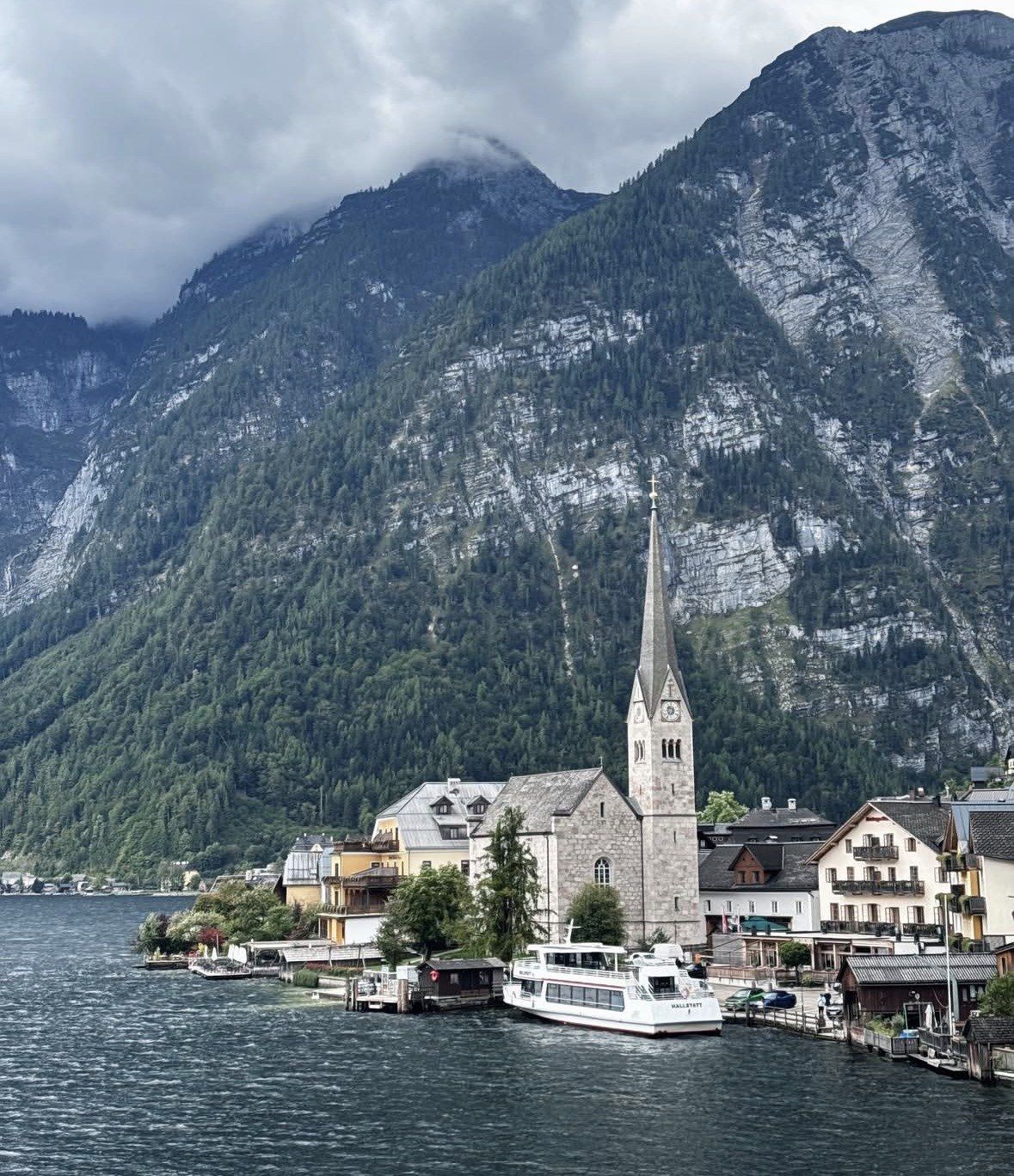
Hallstatt railway station is on the opposite, east shore of the lake from the village. It is two minutes downhill from the platforms to the pier, and MS Stefanie, run by Hallstättersee Schifffahrt Hemetsberger, covers the water in about 15 minutes. Sailings are built around the train arrivals and the operator keeps them running on all 365 days, calling it the only ship connection on an Austrian lake that works through the winter, so a February arrival from Salzburg is met as reliably as a July one. Bring notes: the boat operator takes cash only.
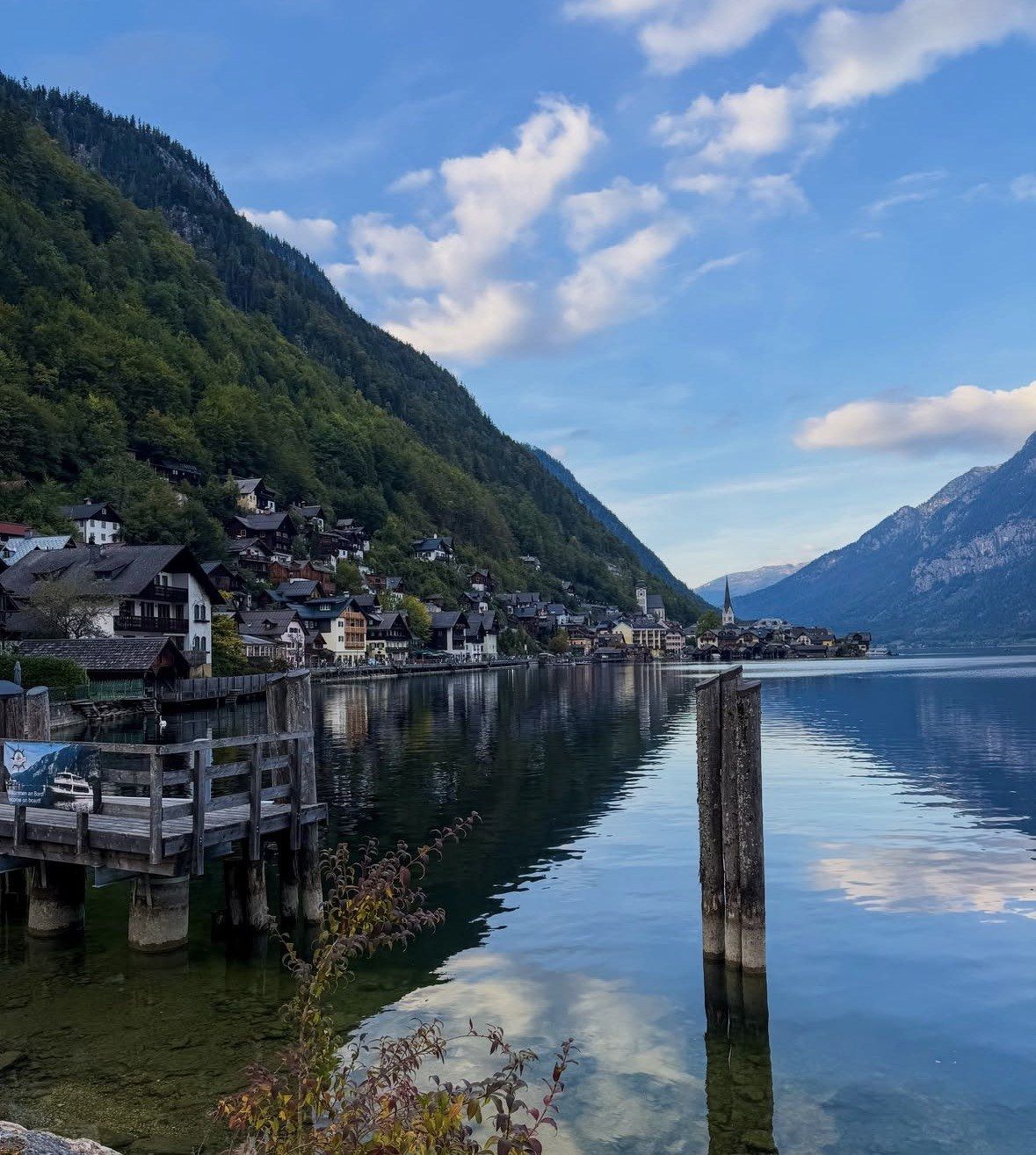
This is the route that puts you ashore a few steps from the market square, with the churches, the roofs and the Dachstein end of the lake in front of you as you come in.
Going by bus via Bad Ischl on lines 150, 541 and 543
The bus from the city is line 150 of the Salzburger Verkehrsverbund, from Salzburg Hauptbahnhof to Bad Ischl, where the line terminates and everybody changes. It runs hourly and at times every half hour, and the Salzburg to Bad Ischl leg takes about 1 hour 35. Extra weekend buses are added only in the high-demand months from May to September and on Advent weekends, so a Saturday in March is not the same service as a Saturday in July. From 14 September 2026 the line runs up to four times an hour at peak on the Salzburg to St. Gilgen section, and on busy weekends up to 10,000 passengers use the Salzburg to Bad Ischl buses.
From Bad Ischl, the official arrival information gives line 541 as far as the stop 'Gosaumühle' and then a change to line 543 for 'Hallstatt Lahn'. Allow 40 to 50 minutes for that second part. You end up making two changes with luggage in a valley where the buses are not frequent.
There is no evening bus service in the Hallstatt direction. The last departure from Bad Ischl station towards Hallstatt, Obertraun, Gosau and Bad Goisern leaves at 18:16, so an independent bus day is effectively over in the late afternoon and you are watching the clock from the moment you arrive. Anyone who wants the village after 17:00, when the day crowds have drained out, needs the train, a car or a tour that waits for you.
Driving, parking and where the bus actually stops
Day visitors cannot drive into Hallstatt at all. The parking operator states plainly that access to the centre by car is not possible, the historic core is sealed by two barrier systems, and even hotels and apartments inside it cannot be reached by vehicle. Every lot is controlled by automatic barriers and no space can be reserved in advance.
Coming in on the road from Bad Goisern, P1 at the petrol station, Salinenplatz 4, is the first lot you reach and the only one open 24/7: around 210 surface spaces plus 200 in the garage and 4 disabled bays, 5 minutes on foot from Salzwelten and about 20 from the centre. P2 on Kohlstattweg by the Saline opens 05:00 to 22:00 and sits about 15 minutes from the centre and a minute from Salzwelten. P4, towards Obertraun and the Kessel, operates from April, 06:00 to 20:00, and the P3 and P4 area is about 30 minutes on foot from Salzwelten and 40 from the centre with no shuttle. Salzwelten keeps no car park of its own, and its own site budgets at least an hour for finding a space before advising visitors to come by public transport instead, which is worth knowing if you have driven out from Salzburg for a timed tour.
Arriving by bus, the stop you want is Hallstatt Lahn, the central stop in the village and the one line 543 serves. From there the lakeside street takes you towards the market square, and that street is a building site: Seestraße is being rebuilt between Polreich and the war memorial from 12 October 2026 to an estimated 25 June 2027, under traffic-signal control, with work pausing from 21 December 2026 to 11 January 2027. Expect single-lane running, noise and narrowed footways along the water on that stretch.
- P1, Salinenplatz 4: open 24/7, around 210 surface and 200 garage spaces, 4 disabled bays, about 20 minutes' walk to the centre
- P2, Kohlstattweg by the Saline: 05:00 to 22:00, about 15 minutes to the centre and one minute to Salzwelten
- P4, towards Obertraun and the Kessel: from April, 06:00 to 20:00, about 40 minutes to the centre with no shuttle
- Coaches enter only on a booked slot, with a minimum stay of 2 hours 20 minutes and a cap of 54 a day
Take a guided day trip from Salzburg instead
For a single day out of Salzburg, an organised trip is the sensible call. It removes the Attnang-Puchheim connection, the two bus changes at Bad Ischl and Gosaumühle, the 18:16 cut-off out of the valley and the gamble of a barrier-controlled car park that cannot be booked. You also avoid the walk in from the lots, which runs 5 to 20 minutes depending on where a space turns up.
The shorter option is 5.5 hours in total, from €85, rated 4.4 ★ (1182 reviews), with a professional guide on a coach leaving the bus terminal at Mirabellplatz, on the corner of Hubert Sattler Gasse 1 in front of St Andrew church. Nothing you might want to enter in Hallstatt is covered by the fare: entrances stay optional and are paid separately, what you actually see is settled on the spot against the opening hours of the season you travel in, and the Skywalk visit is allowed 1 hour. It suits travellers whose main base is Salzburg and who want the village, the lake and the viewpoints without a logistics exercise.
If the salt mine is the point of the day, take the 8-hour small-group version from €149, rated 4.6 ★ (289 reviews), with free city or hotel pick-up in Salzburg and an air-conditioned vehicle for the valley roads. Mine and funicular together sit on the not-included list, €43 per adult and €21 per child aged 4 to 15, collected in cash by the guide rather than at a desk. The underground part lasts about 90 minutes at a constant 8 °C, so carry a layer with sleeves and remember that children go in only from the age of 4, with registration required.
Questions people ask
Is there a direct train from Salzburg to Hallstatt?
No. Every rail route involves a change at Attnang-Puchheim, where the connection is 2 to 3 minutes, and the whole trip takes 2h16 or 2h41 with departures at least hourly. The train then stops at Hallstatt station on the east shore, not in the village, so the boat across is part of the route rather than an optional extra.
Does the lake crossing from Hallstatt station run in winter?
Yes. MS Stefanie works the station-to-village route on all 365 days for Hallstättersee Schifffahrt Hemetsberger, with departures tied to train arrivals, and it is described as the only ship connection on an Austrian lake that keeps going through the winter. The scenic Round-trip South to Obertraun is a different service and sails only from May to September. The boat operator takes cash only.
Does bus 150 run as often at weekends?
Not all year. Line 150 is hourly and at times every half hour, but the extra weekend buses are put on only in the high-demand months from May to September and on Advent weekends. From 14 September 2026 the line runs up to four times an hour at peak on the Salzburg to St. Gilgen section. Check your own date rather than assuming a weekday pattern.
How long should I plan to spend in Hallstatt itself?
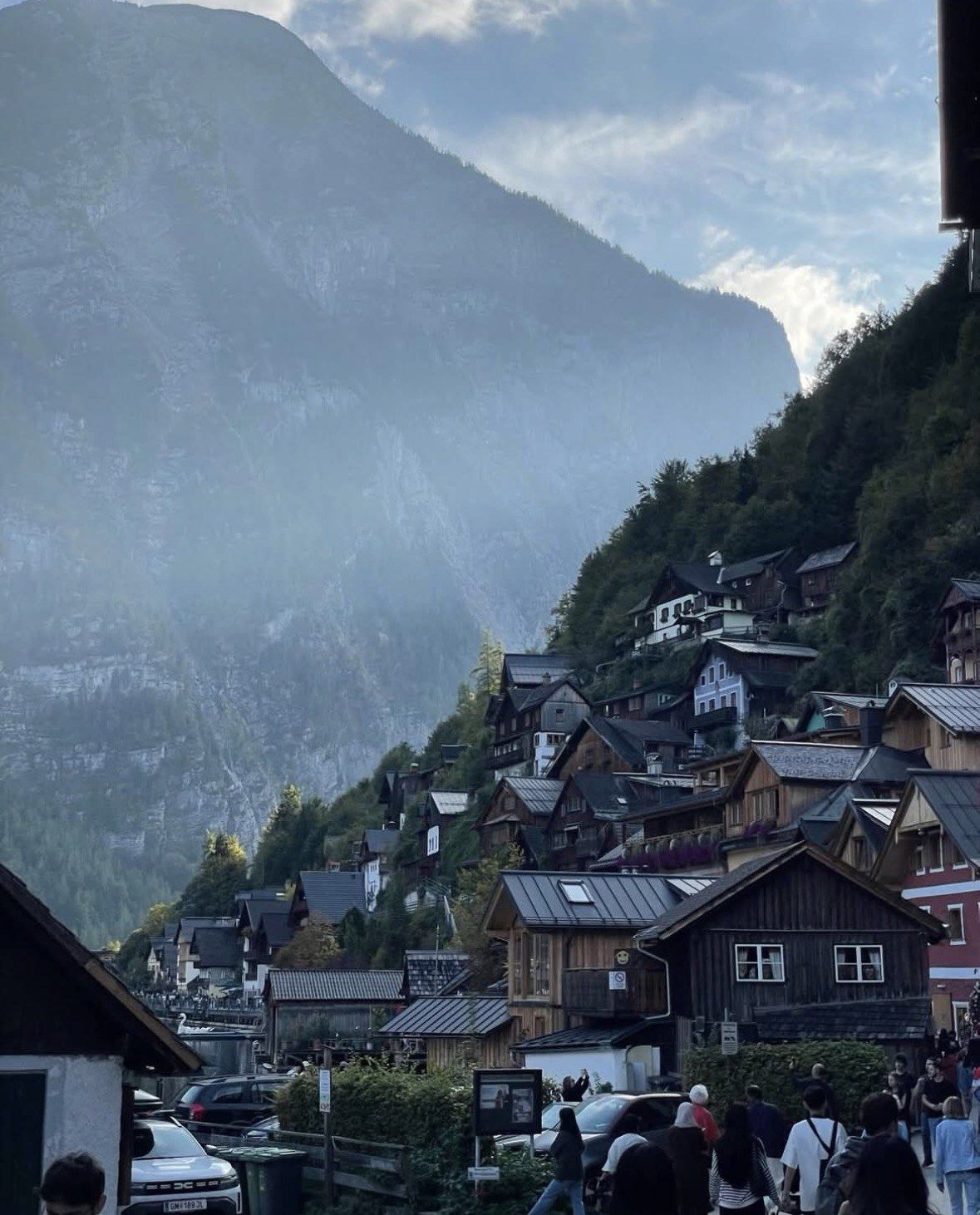
If the Salzberg is on your list, the regional tourism board advises at least three hours for the mine and funicular together, with roughly 90 minutes of that underground. Add an hour or two for the market square, the lakeside and the ticketed sights down in the village. Time your own arrival around the coaches: each one enters on a slot it has to use for at least 2 hours 20 minutes, so the narrow lanes fill from late morning to mid-afternoon.
Do I need a motorway vignette to drive from Salzburg to Hallstatt?
All cars, motorbikes and camper vans up to 3.5 t must display a vignette or hold a digital one before using Austrian motorways and expressways. The A1 is toll-free between the Walserberg border and the Salzburg Nord junction, so a vignette becomes necessary once you continue past Salzburg Nord. The official car route leaves the motorway at the Thalgau exit and continues via Hof, the Fuschlsee, Bad Ischl and Bad Goisern.
Read also